Denver Bicycle Accident Lawyer on Bicycle Crashes Caused by Open Car Doors
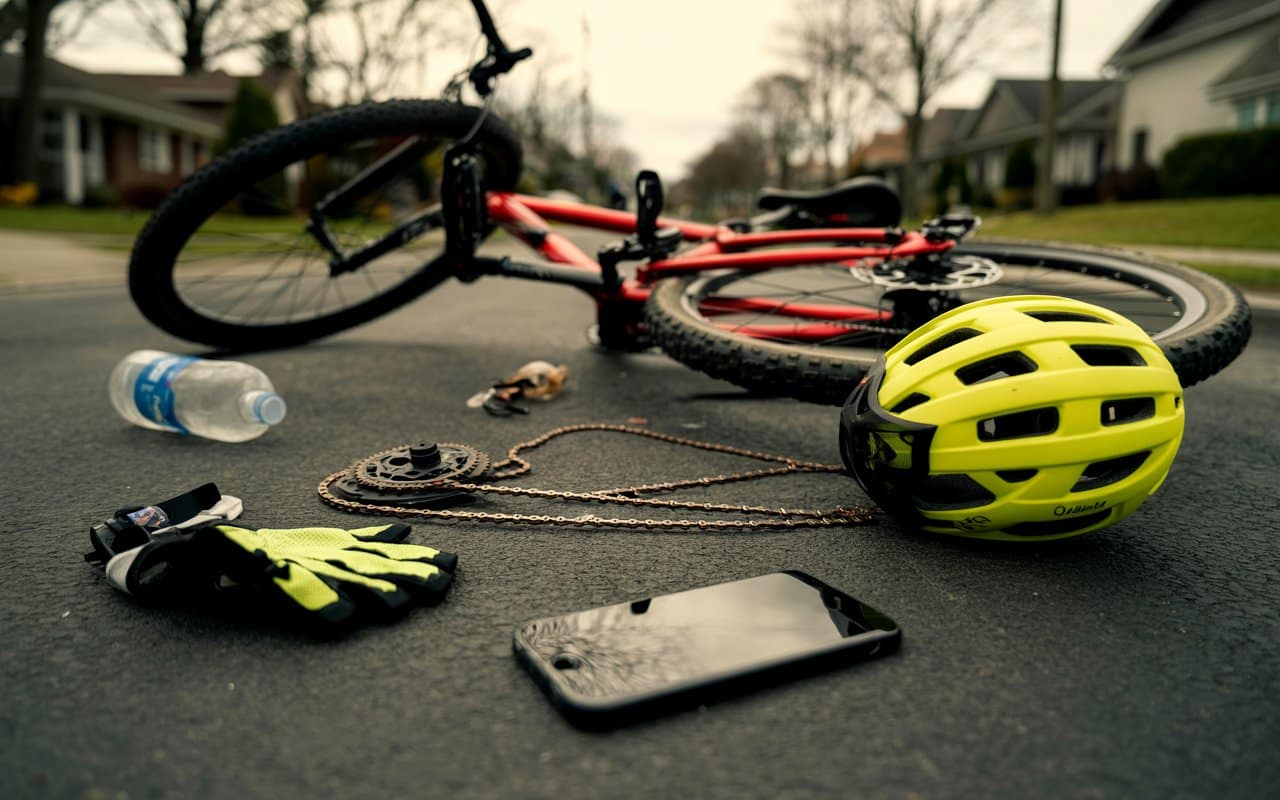
A bicycle rider can do many things right and still end up in the hospital because someone in a parked car opened a door without looking. It happens fast. One second the lane is clear, the next there is a metal wall in front of the rider’s chest, hands, or front wheel. In Denver, where cyclists often ride beside parked cars on busy urban streets, dooring crashes are not rare, and they are often more serious than drivers expect.
For injured riders, the legal issues may seem simple at first. A person opened a car door into traffic. The cyclist crashed. But these cases are rarely handled well when everyone treats them as minor. Insurance carriers may try to reduce the event to a “bike tipped over” claim. Police reports can be thin on detail. Physical evidence disappears quickly. The rider’s own statements, especially while shaken or concussed, can be used against them later.
A Denver bicycle accident lawyer who has handled these cases looks at them differently. Dooring collisions often involve clear safety rules, preventable conduct, and injuries that linger far longer than a bent wheel or torn jersey would suggest. They also raise practical questions about fault, lane position, comparative negligence, and proof.
Why open-door crashes are uniquely dangerous
A rider who hits an unexpectedly opened car door usually has almost no time to react. At city riding speeds, even ten to fifteen miles per hour can leave only a split second for braking or swerving. If the rider strikes the outer edge of the door directly, the impact can throw them over the handlebars. If they swerve left to avoid the door, they may enter moving traffic and suffer a second collision that is even worse than the first.
The injuries in these cases often follow a pattern. Broken collarbones are common. So are wrist fractures from trying to catch the fall, shoulder tears, facial injuries, dental trauma, concussions, rib fractures, and road rash deep enough to leave scarring. In harder impacts, especially where a cyclist is pushed into a travel lane, injuries can involve the spine, pelvis, or traumatic brain damage.
People outside the cycling world sometimes underestimate the force involved. A car door is heavy, rigid, and sharp at the edge. A bicyclist has almost no protection. There is no airbag, no steel frame, no seat belt. Even a helmet, while important, only reduces some categories of head injury. It does nothing for a shoulder driven into pavement or a knee twisted under the bike.
Denver riders know another problem well. Streets with painted bike lanes next to parked cars can create a false sense of security. A cyclist may be exactly where the road design suggests they should ride, yet still be inside the “door zone,” the area where a parked driver or passenger can swing a door open into the rider’s path. That gap between roadway design and real-world safety becomes important in both injury prevention and legal analysis.
The law often starts with a basic rule: look before opening
Colorado law generally does not permit a person to open a vehicle door on the side available to moving traffic unless it is reasonably safe to do so, and to leave it open longer than necessary to load or unload passengers. That principle matters because it reflects ordinary common sense and a legal duty. Drivers and passengers are expected to check for approaching traffic, including bicycles, before opening into a lane of travel.
That duty is not limited to the driver. Passengers can also be responsible if they open a door into a cyclist. In practice, that can complicate an insurance claim. The vehicle may be insured by one person, driven by another, with a passenger who actually caused the impact. Sorting out who did what, and which policy applies, is part of the job.
The legal claim itself is usually based on negligence. The injured cyclist must show that the person opening the door failed to act with reasonable care and that this failure caused the injuries. In many dooring cases, that is a strong argument. Still, strong facts do not present themselves. They have to be documented and preserved.
How these crashes happen on Denver streets
Most dooring incidents do not occur on quiet blocks. They happen where parking turnover is constant and attention is divided. Think of corridors with restaurants, rideshare drop-offs, delivery vehicles, downtown errands, and people stepping out in a hurry. A person parked at the curb may be watching traffic on the driver’s side, glancing at a phone, speaking to a passenger, or focused on a meter, not on a cyclist approaching from behind.
The rider’s experience is usually different. Cyclists often scan ahead for wheel movement, brake lights, occupied front seats, or a shoulder shifting toward the door. Experienced riders learn these cues because they have to. But even skilled riders cannot predict every sudden opening, especially if multiple cars are lined up and a cyclist’s escape route is boxed in by moving traffic on the left and parked vehicles on the right.
There is also a persistent misconception that a cyclist should simply ride farther left and avoid the problem entirely. On some streets that is the safest choice. On others, road width, traffic speed, debris, storm grates, buses, and the conduct of nearby drivers make that difficult or dangerous. The law does not require a cyclist to achieve perfect hindsight. It asks whether the rider acted reasonably under the conditions that existed at the time.
Fault is not always contested, but damages often are
Insurance companies sometimes accept that the door should not have been opened. Then they pivot to the second part of the case, the value of the harm. That is where many injured cyclists get shortchanged.
A dooring claim is not just about the bicycle repair estimate. It includes medical treatment, lost income, pain, functional limits, future care, and the very real disruption of daily life. A software engineer with a fractured wrist may miss less time than a carpenter with the same injury, but the carpenter’s wage loss can be immediate and severe. A competitive cyclist with a shoulder injury may face months of rehab even after an emergency room discharge that reads like a routine case. A rider with a mild traumatic brain injury may look fine in photos and still struggle with headaches, memory lapses, light sensitivity, and fatigue for months.
That is why experienced case preparation matters. Medical records need context. Photographs need explanation. Clients need to document symptoms honestly and consistently. A case built around a few ambulance records and a bike shop invoice will rarely capture the full impact of a serious crash.
Comparative negligence can affect recovery
Colorado follows a modified comparative negligence rule. In plain terms, an injured person’s recovery can be reduced by their share of fault, and if they are found to be 50 percent or more at fault, recovery is barred. Because of that rule, insurers often look for arguments that shift blame onto the cyclist.
They may say the rider was moving too fast for conditions, riding too close to parked cars, using poor lighting, not paying attention, or violating a traffic rule. Sometimes those allegations have support. Often they are broad guesses made before the full facts are known.
A careful lawyer examines the street layout, lane width, traffic pattern, parked car spacing, sight lines, and witness accounts. If the cyclist had little room to move left safely, that matters. If the door opened suddenly from a fully closed position, that matters. If the rider tried to brake and left tire marks, or if the bike struck the door edge rather than glancing off it, those details matter too. Real cases turn on these specifics, not on generic assumptions about cyclists.
There are also edge cases worth noting. A rider traveling very fast downhill through a narrow corridor of parked cars may face tougher comparative fault arguments than a commuter moving at a moderate pace in a marked bike lane. A cyclist wearing headphones or looking at a phone may damage an otherwise strong claim. On the other hand, a driver or passenger who “flings” a door open without any check at all may carry the great bulk of responsibility even if the rider might have made a different lane choice.
The evidence that matters most disappears quickly
Dooring cases often look straightforward until it is time to prove them. Then the gaps show up. The vehicle is gone. The door is repaired. Nearby businesses have overwritten their surveillance footage. Witnesses cannot be found. The cyclist’s helmet has been discarded. Photos were never taken.
That is why the early days after a crash matter so much. A Bicycle Accident Lawyer Denver cyclists trust will usually focus on preservation right away, not months later. That can include obtaining the crash report, contacting witnesses, sending preservation letters, securing camera footage, photographing the scene, documenting the bike damage, and making sure the medical timeline is complete.
For riders and families, a short practical checklist can help in the immediate aftermath, assuming the injured person is medically stable:
- Get medical attention promptly, even if symptoms seem manageable at first.
- Photograph the car, door position, bike damage, street layout, and visible injuries.
- Obtain names and contact information for the driver, passengers, and witnesses.
- Preserve the bicycle, helmet, clothing, and any onboard camera footage.
- Avoid giving a detailed recorded statement to an insurer before understanding the injuries.
Those five steps can make a major difference later. Concussions are a classic example. Many cyclists feel embarrassed, angry, or eager to minimize the event. They tell police or insurers that they are “okay,” then wake up the next morning dizzy, nauseated, and unable to focus. A casual early statement can become a problem if the insurer later argues that the injury was minor or unrelated.
Medical treatment tells the story, but only if it is complete
Emergency care is only the beginning. Some injuries become obvious only after the adrenaline fades. A shoulder that seems bruised may turn out to involve a labral tear. A wrist that feels sprained may actually be fractured. A rider who blacked out for a moment may develop post-concussion symptoms that affect work and driving.
Consistency matters. That does not mean exaggeration. It means accuracy. If pain worsens with typing, lifting, climbing stairs, or sleeping on one side, that should be reported. If dizziness makes commuting impossible, that belongs in the medical record. If physical therapy helps but progress plateaus, that matters too. Insurance adjusters and defense lawyers study records closely. They look for treatment gaps, missing complaints, and discrepancies between what was reported to doctors and what appears later in a legal demand.
Good case value often comes from honest, detailed medical documentation over time. A claim built on rushed urgent care visits with no follow-up is hard to present, even when the rider is truly hurt. By contrast, a claim supported by orthopedic evaluation, imaging when necessary, therapy notes, work restrictions, and symptom tracking gives a much clearer picture.
Insurance issues are not always simple
Many people assume the at-fault driver’s auto insurance will take care of everything. Sometimes it does. Sometimes it does not. Coverage questions can arise if the person who opened the door was a passenger, if the car was being used for work, if the vehicle was part of a rideshare trip, or if coverage is denied for some unrelated policy issue.
Cyclists may also have additional sources of protection. Depending on the policies involved, medical payments coverage, uninsured or underinsured motorist coverage, or health insurance can all play a role. The order in which these pieces fit together can affect out-of-pocket costs, reimbursement claims, and the net recovery.
This is one reason people often benefit from legal advice early rather than late. The legal question is not only who was careless. It is also where the money comes from, what deadlines apply, and how to avoid preventable mistakes while the claim is developing.
When a dooring case becomes a lawsuit
Not every claim needs to be filed in court. Many settle through insurance negotiations once treatment is complete or the prognosis is clear. But some cases need litigation because liability is disputed, the injuries are serious, or the insurer refuses to value the losses fairly.
Lawsuits over bicycle crashes caused by open doors often involve more than the crash itself. They may include depositions about visibility, street positioning, local traffic conditions, prior statements, medical history, and future limitations. Defense lawyers may ask why the cyclist did not avoid the door. A strong answer usually depends on evidence, not indignation. Distances, timing, and roadway geometry carry more weight than broad claims that the event was “unavoidable.”
Experts may also be useful in larger cases. An orthopedic specialist may explain why shoulder instability affects long-term function. A vocational expert may address lost earning capacity for someone whose job requires manual labor. In select cases, an accident reconstruction expert can help show how quickly the door opened and why the rider had no realistic chance to evade it.
The bicycle itself is part of the case, but not the whole case
People who do not ride often focus on the property damage first because it is visible and easy to price. Carbon wheels, a cracked frame, damaged electronic shifting, a destroyed helmet, torn clothing, and broken lights can easily add up to thousands of dollars. https://rentry.co/oiymskhn That matters. A serious commuter or road bike setup can cost far more than many adjusters initially assume.
Still, it is usually the human loss that defines the claim. A rider who cannot carry a child, return to training, commute independently, or sit through a workday without pain has suffered more than a repair bill. In some cases, the emotional effects are significant too. It is not unusual for cyclists to feel genuine fear about riding again, especially on urban streets with parked cars. That fear can linger long after bones heal.
A common defense: “The cyclist should have seen it coming”
This argument appears in many forms. Sometimes the insurer says the cyclist rode in the door zone. Sometimes they say the rider should have predicted that an occupied car might open a door. Sometimes they imply that all city cyclists assume this risk.
That line of defense has limits. The law expects caution, not clairvoyance. A cyclist may be aware that parked cars pose danger and still have no reasonable opportunity to avoid a particular door opened at the wrong moment. It also matters that riders frequently must balance competing hazards. Moving farther left may reduce door risk but increase exposure to passing vehicles. The “safest” option on paper may not be the safest option in traffic.
One practical example comes up often: a bike lane placed directly adjacent to parallel parking. If a rider follows the lane marking and a door swings open abruptly, the insurer may still argue the cyclist should have ridden outside the lane. But the existence of a marked lane can support the rider’s reasonableness, especially where moving left would have placed the cyclist into active traffic with little buffer. Facts like traffic volume, vehicle speed, and lane width all shape that analysis.
What riders can do to reduce risk without surrendering their rights
No lawyer can promise that caution will prevent every dooring crash. Still, experienced urban cyclists often develop habits that help. They scan for occupied vehicles, watch mirrors and silhouettes, and maintain a line that gives as much cushion as traffic conditions safely allow. Some use brighter daytime lighting to increase visibility, even in clear weather. Others lower speed through dense parking corridors where pedestrians and doors are unpredictable.
Those are smart riding practices. They do not excuse careless door opening. The legal system should not demand that cyclists absorb all risk created by inattentive motorists and passengers. Safety advice and fault analysis are related, but they are not the same thing.
When to speak with a lawyer
Minor crashes with no real injury sometimes can be resolved without legal representation. But many dooring cases are not minor, even when they first appear that way. If medical treatment extends beyond a few visits, if there is a fracture or head injury, if time is missed from work, if liability is being questioned, or if the insurer is pressing for a quick recorded statement or settlement, it is wise to get legal advice.
A good lawyer should be able to explain the likely issues plainly. Was the cyclist in a legally defensible road position? What evidence needs to be secured? Which insurance policies may apply? Is it too early to value the claim? What medical documentation will matter most over the next few months? Those are practical questions, and the answers shape outcomes.
For Denver riders, dooring crashes are one of the clearest examples of how a small act inside a parked car can cause major harm outside it. The person who opens a door into traffic may view it as a momentary lapse. The cyclist may live with the consequences for a year or longer. A properly handled claim recognizes that difference, documents it carefully, and pushes back when insurers try to minimize what really happened.